Case study01 / 05Employment cost intelligence
talentcost
A hiring question answered in under a second, in 158 countries.
- Product
- talentcost
- Category
- Employment cost intelligence, SaaS
- Services
- Product strategy, Brand identity, UI/UX design, Front-end development, AI features
- Coverage
- 158 countries and territories
- Live
- Visit site
A salary is never what a hire costs. On top of it sit employer contributions, mandatory benefits and payroll levies, and every country stacks them differently. Until the offer is signed, most hiring teams are guessing at a number that moves their budget by a quarter.
The answer already existed, buried in government rate tables and behind the sales calls of global payroll vendors. Getting it meant a spreadsheet nobody trusted or a demo request that took a week. The design problem was not calculation, it was access and proof: make the number immediate, and make it defensible enough to put in front of a finance director.
Show the whole number, and show your work.
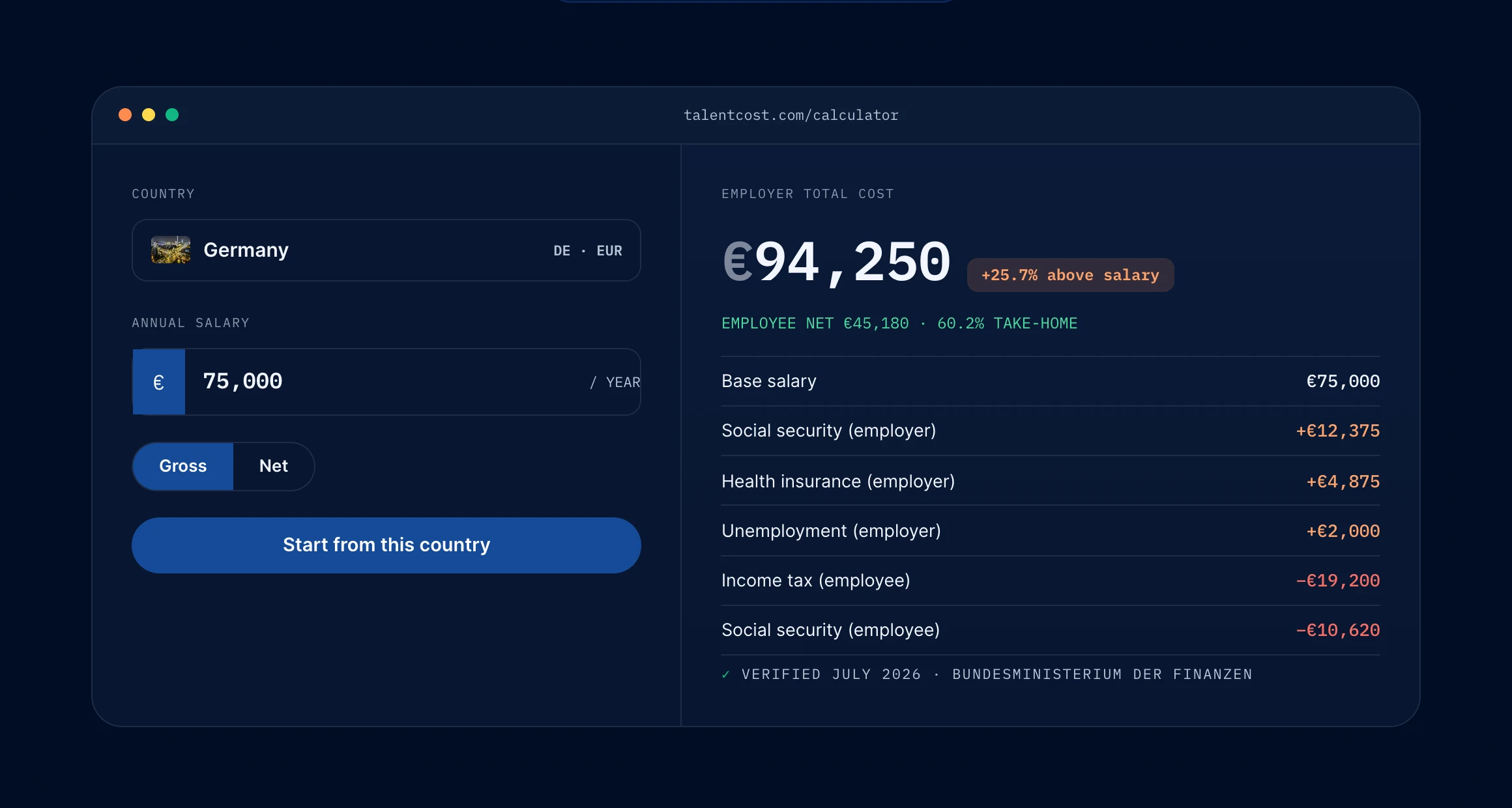
Every result returns the employer total cost, the employee take-home and each statutory line that produced them, with the source named and the date it was verified. Nothing is withheld to force a conversation. There is no email wall and no account before you see the answer.
Execution
- 01
One screen, one question, one second
Pick a country, enter a salary, choose gross or net. The interface asks for nothing else. The result loads in under a second and reads top down: the total first, the take-home second, then the contributions, taxes and levies that explain the gap.
- 02
Four layers, drawn instead of listed
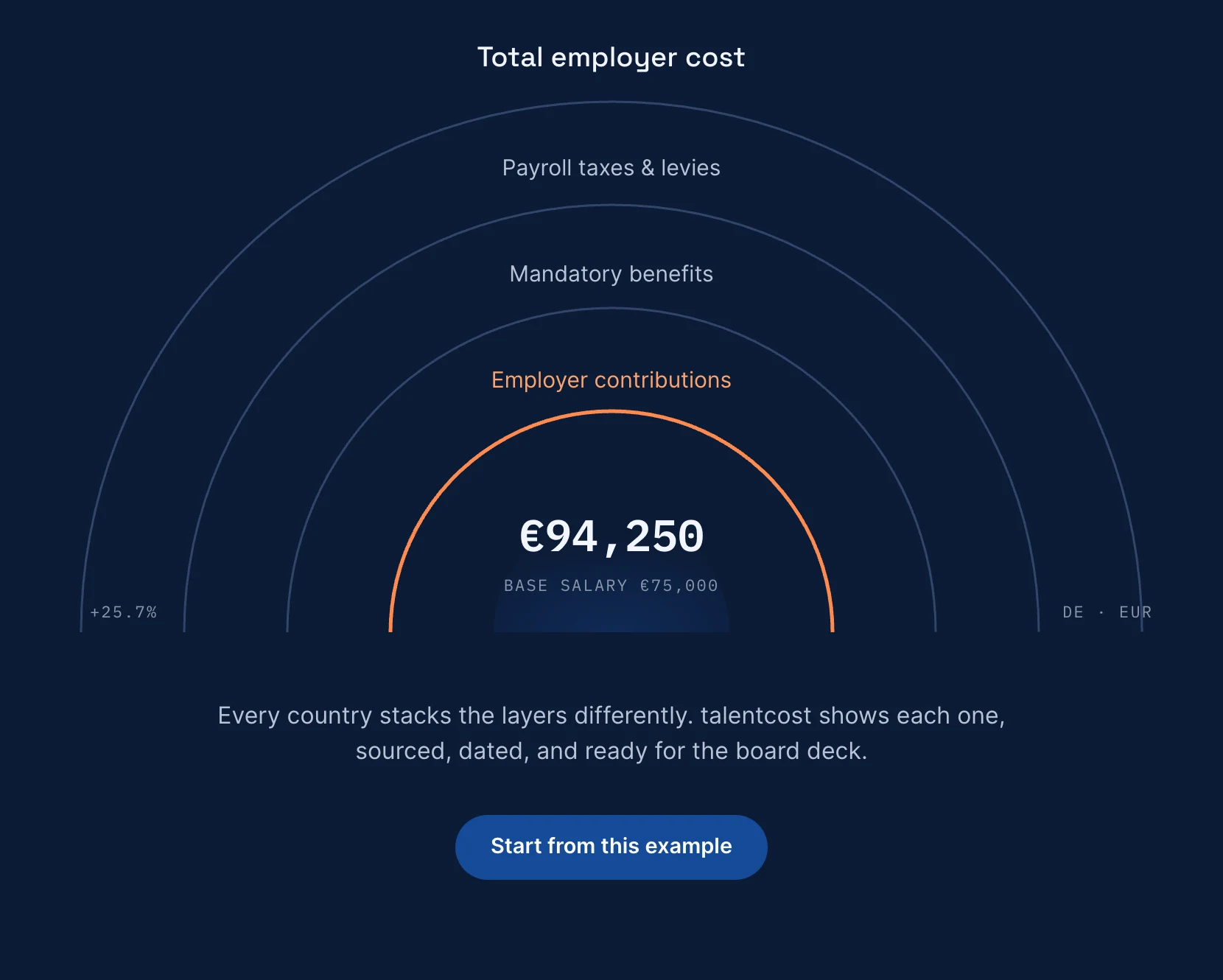
Base salary, employer contributions, mandatory benefits and payroll levies nest as concentric arcs, so the shape of a country reads before any figure does. It turns a table into something you can hold in your head and put in a board deck.
- 03
One engine behind 158 markets
Each market has its own statutory stack modelled line by line rather than approximated from a regional average, and rates are refreshed within fourteen days of a legislative change. The country library is browsable on its own, so a team can compare markets before it has picked one.

- 04
From the cost of a role to the worth of a person
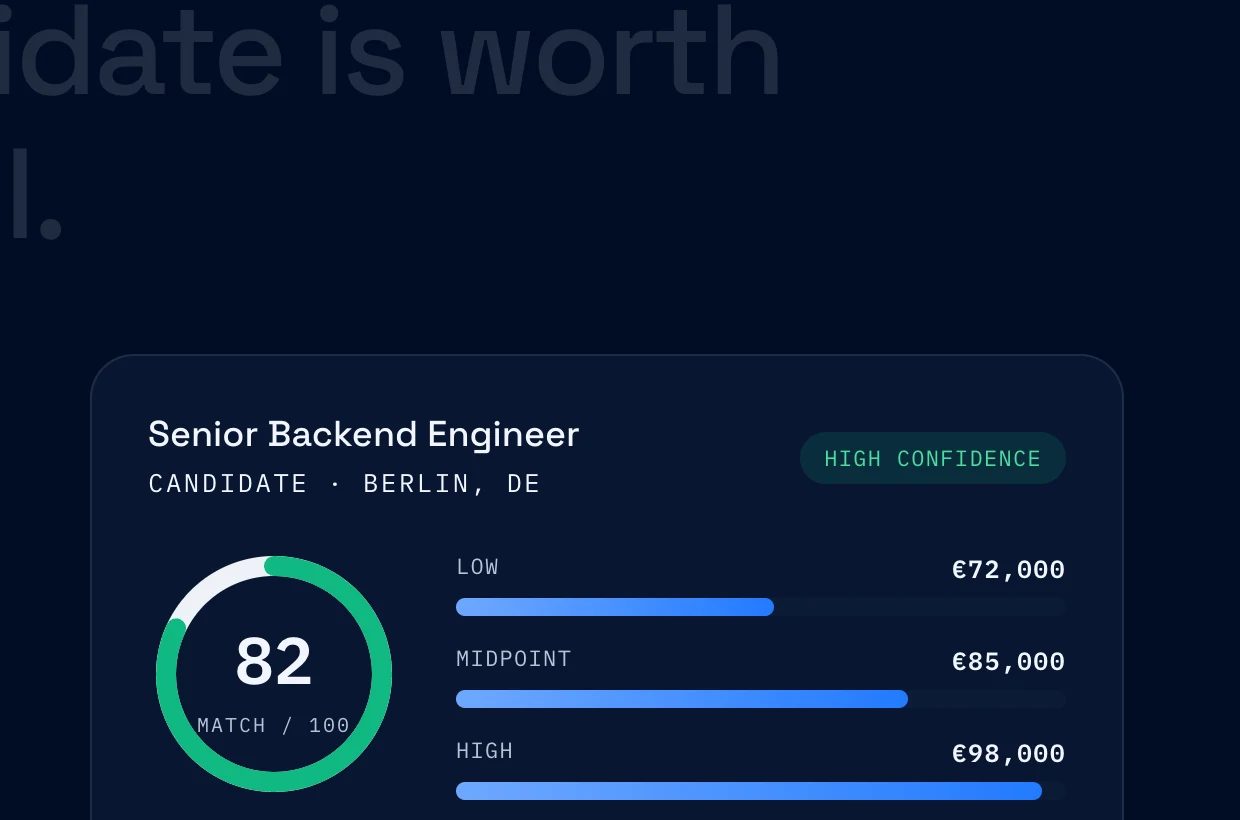
The CV analyser takes a candidate and a target role and returns a match score, a salary range with the reasoning attached, the skills it could confirm and the questions a recruiter should still ask. The same engine then prices the offer, so the conversation about a person and the conversation about the budget happen on one screen.
158Countries and territories modelled line by line
The number, before the offer.
talentcost is live and answering. A hiring lead can price a role in a market they have never hired in, see exactly which statute produced each line, and take the result into a budget conversation without a vendor call in between.
